

Login
Log in if you have an account
Register
By creating an account with our store, you will be able to move through the checkout process faster, store multiple addresses, view and track your orders in your account, and more.
Create an accountHow to Choose a Shower Kit: Dimensions, Valve Type, Water Pressure and Finish
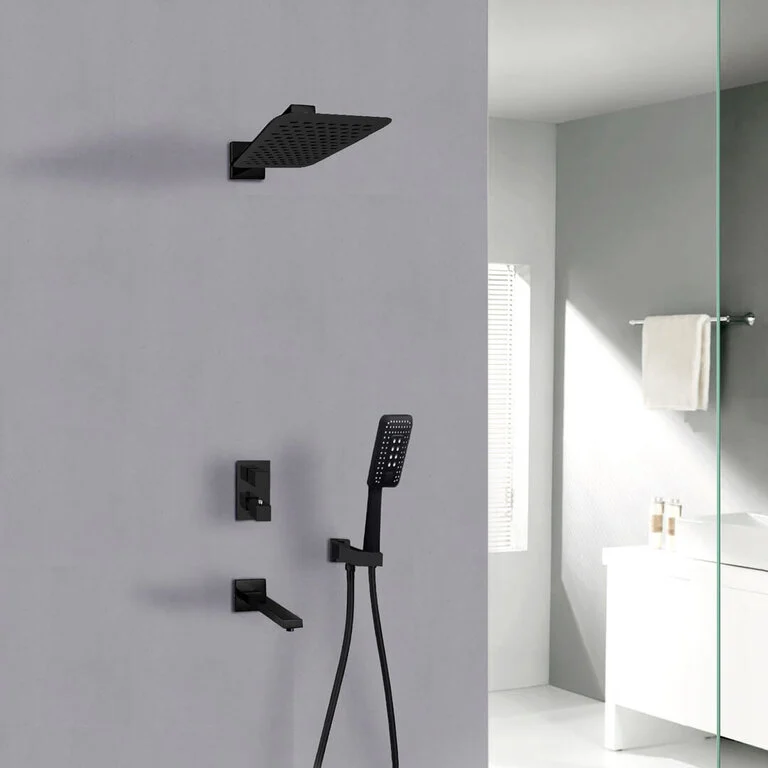
Renovating a bathroom or replacing aging fixtures? How to choose a shower kit (dimensions, valve type, water pressure and finish) is one of the most important questions you'll face, as the right choice improves comfort, safety and longevity. A shower kit (or shower system) should first be selected based on available space, the type of thermostatic or standard valve, your actual shower water pressure, and then the finish — which must withstand humidity and daily use.
In this guide, you'll find a straightforward method to avoid common mistakes and choose a system suited to your configuration (tub-shower combo, standalone shower, partial or full renovation).
1) Measuring Dimensions: The Foundation of a Successful Shower Kit
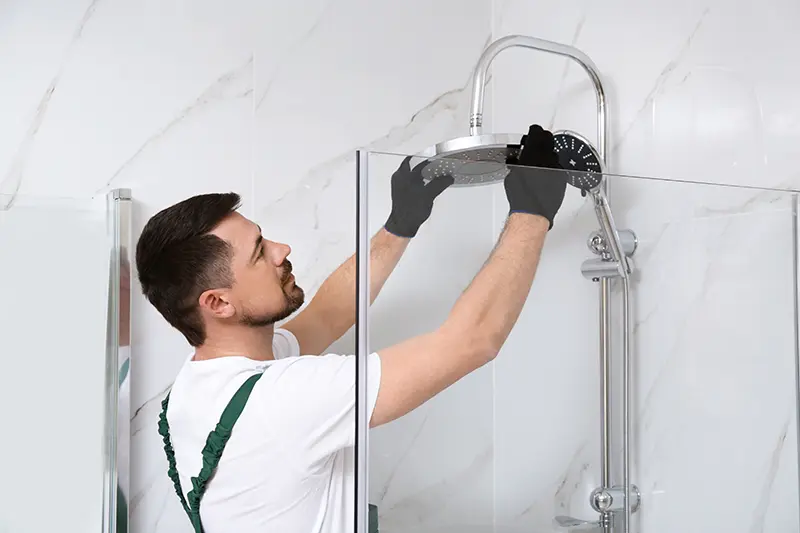
Before comparing styles, start with the technical side: dimensions and placement. A beautiful kit that's poorly proportioned quickly becomes uncomfortable (jet too low, shower arm too short, controls hard to reach).
Height and position of the showerhead
Most installations aim to position the showerhead above the height of the tallest user. In practice, you want comfortable clearance so that water doesn't hit the face by default. If you're opting for a rain shower, plan for enough height to enjoy the "curtain of water" effect without excessive splashing.
Wall distance and footprint
Check:
-
the projection of the shower arm (so the jet falls in the center of the shower zone);
-
the maneuvering space for a handheld shower (if included);
-
the position of the controls (practical if you have a glass door or a niche).
Reversible shower: useful for adapting to existing plumbing
A reversible shower is a great option when the existing configuration dictates a specific side (water supply lines, door placement, load-bearing wall). The concept: certain systems allow you to flip the orientation (controls on left/right, upper/lower outlet) to avoid more extensive plumbing work. This is a real advantage during renovations, especially in condos or compact bathrooms.
2) Choosing the Valve Type: Comfort, Safety and Compatibility

The valve is the heart of your system. It affects temperature stability, flow rate, ease of use and even compliance with local codes.
Thermostatic valve: the benchmark for stability
A thermostatic valve maintains your chosen temperature even if someone opens a tap elsewhere (washing machine, sink, kitchen). This is especially appreciated in family households: fewer sudden temperature changes, more day-to-day comfort.
-
Advantage: stable temperature and precise adjustment.
-
Ideal for: multi-occupant homes, morning/evening routines, children.
Pressure-balancing valve: a reliable option
A pressure-balancing valve primarily adjusts the hot/cold ratio to limit thermal shocks when pressure fluctuates. It's often simpler and can be very satisfying if your water supply is stable.
Compatibility (renovation vs. new construction)
Before purchasing a shower kit, confirm:
-
the valve type required by your current installation;
-
whether you're replacing only the trim or also the in-wall valve body;
-
the number of outlets you want (showerhead only, head + handheld, or multi-jet options).
Tip: if you're redoing the walls, it's the perfect time to upgrade the valve — access is easy and the end result is cleaner.
3) Understanding Shower Water Pressure: Flow, Comfort and Performance
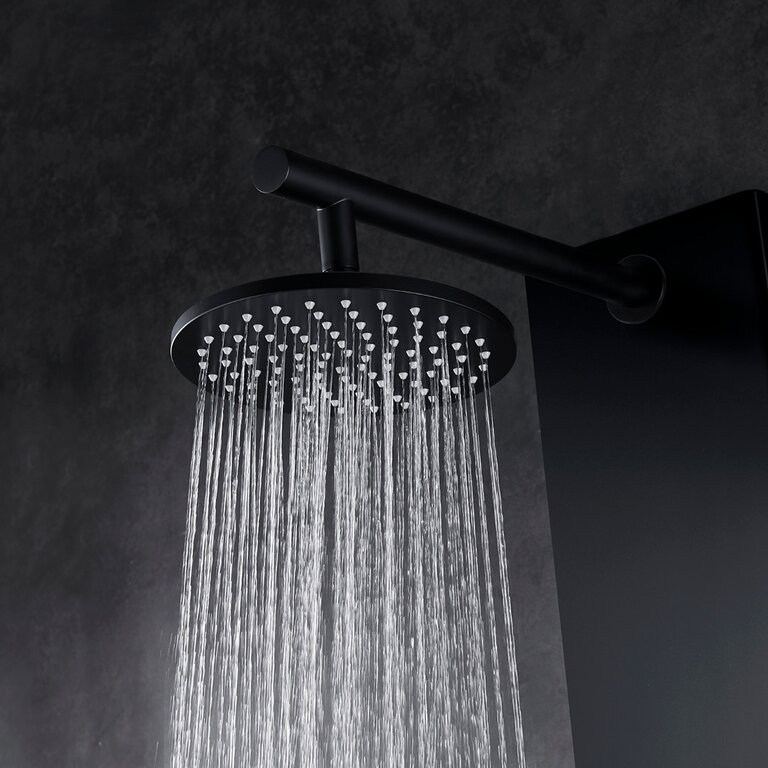
Shower water pressure and flow rate are key factors. A high-end shower system can disappoint if the pressure is low or if your installation limits the flow.
Pressure vs. flow rate: don't confuse the two
-
Pressure: the force pushing water through the pipes.
-
Flow rate: the volume of water coming out (often in L/min or GPM).
A rain shower, for example, is most enjoyable with adequate flow. Conversely, some showerheads are designed to deliver a "full" sensation even at reduced flow, thanks to optimized nozzles.
What to do if pressure is low?
If your shower water pressure is limited (older building, long pipe runs, pressure regulator), prioritize:
-
a high-performing low-flow showerhead (well-designed nozzles);
-
an efficient handheld shower (often more satisfying at modest pressure);
-
a system without too many simultaneous outlets (avoid splitting the flow).
Multiple outlets: watch out for flow sharing
A shower system with head + handheld + body jets can be luxurious, but if the outlets run simultaneously, the flow is divided. Make sure the configuration (diverter) matches your expectations: alternating use (one outlet at a time) or combined use (multiple outlets at once).
4) Finishes and Materials: Aesthetics, Maintenance and Durability
The finish isn't just about matching your décor — it affects maintenance, resistance to water spots and long-term durability.
Chrome: classic and easy to coordinate
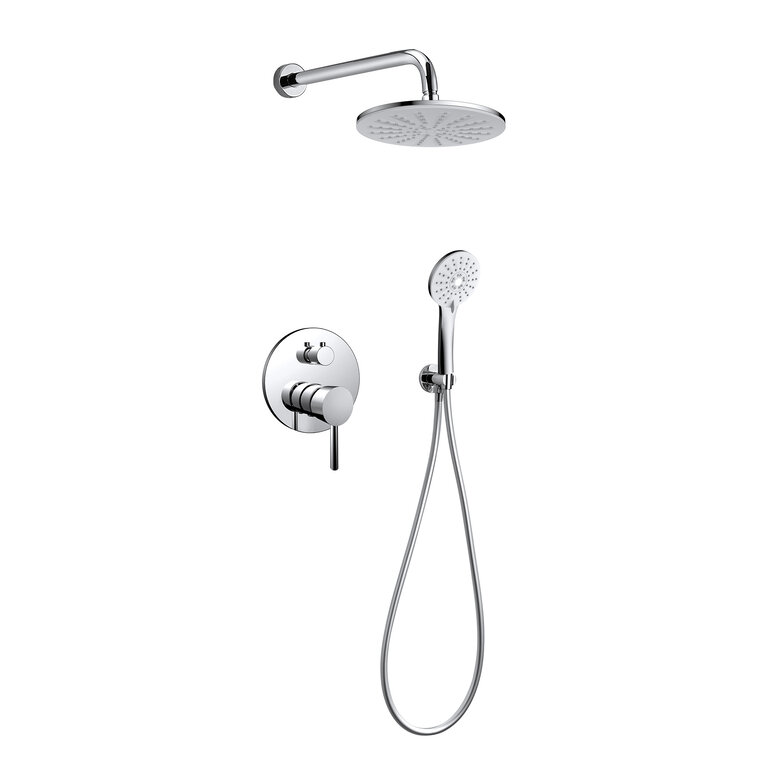
Chrome remains a safe choice: timeless look, broad compatibility with accessories and easy upkeep. It can show water droplets more readily, but wipes clean very easily.
Matte black: modern, but requires a little care
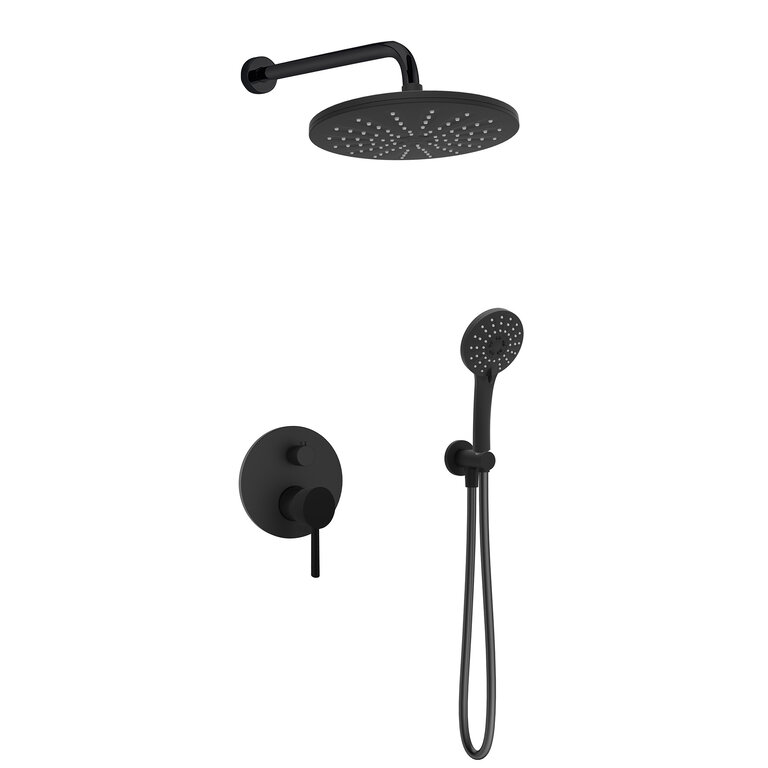
Matte black adds a very contemporary contrast. To keep its uniform appearance, use gentle cleaners (avoid abrasive products). In areas with hard water, a quick wipe-down after each shower helps a great deal.
Brushed nickel / stainless: an excellent compromise
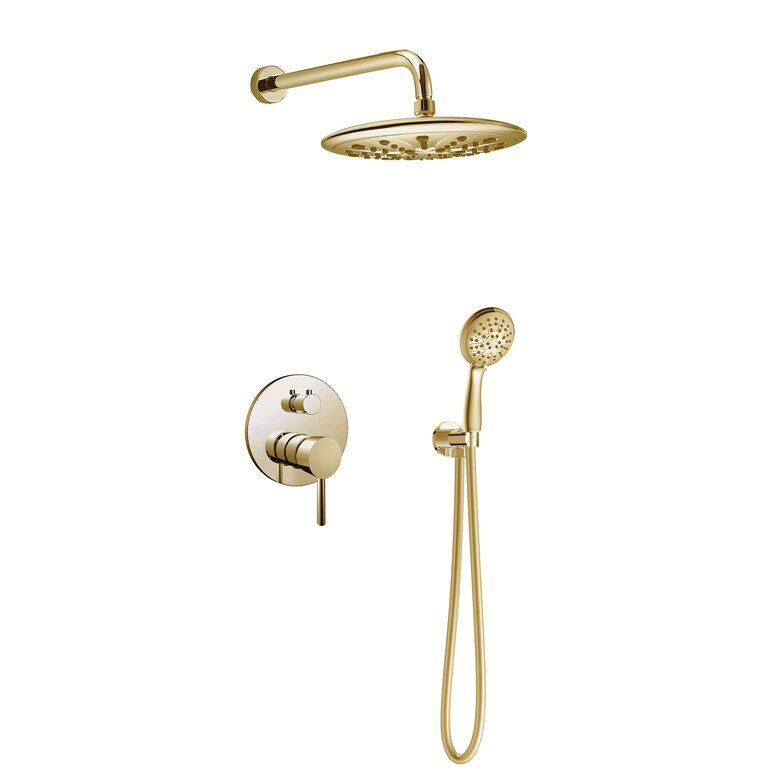
These finishes tend to hide water marks better and integrate well into modern bathrooms. They're particularly well-suited for households that want a premium look without constant upkeep.
Maintenance tip
Regardless of finish, stick to:
-
a microfiber cloth;
-
mild soap;
-
no abrasive pads or harsh products.
5) Choosing the Right Shower System for Your Project
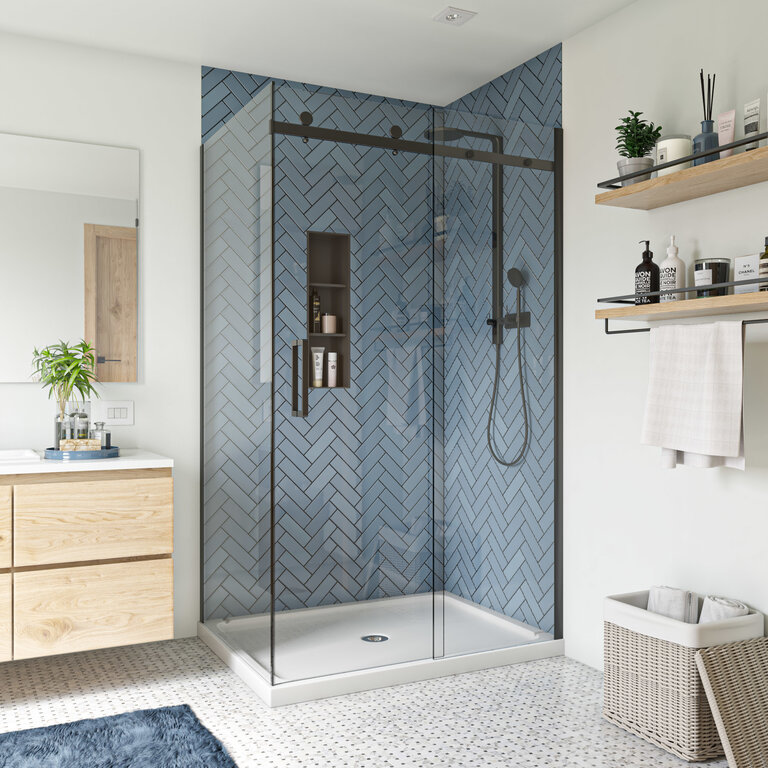
To quickly find a shower system that fits your bathroom, ask yourself these questions:
-
Light renovation or full gut job? If the walls stay, prioritize maximum compatibility with what's already there. If you're opening the walls, you have more freedom to go with a more modern valve.
-
Quick daily shower or spa experience? For the spa feel, think rain shower, thermostatic valve, and possibly a complementary handheld.
-
Who uses the shower? Family: prioritize stability (thermostatic) and ergonomic controls.
-
Is your shower water pressure stable? If it fluctuates, protect yourself with the right valve and avoid configurations that are too demanding on flow.
6) Where to Find the Right Shower Kit?
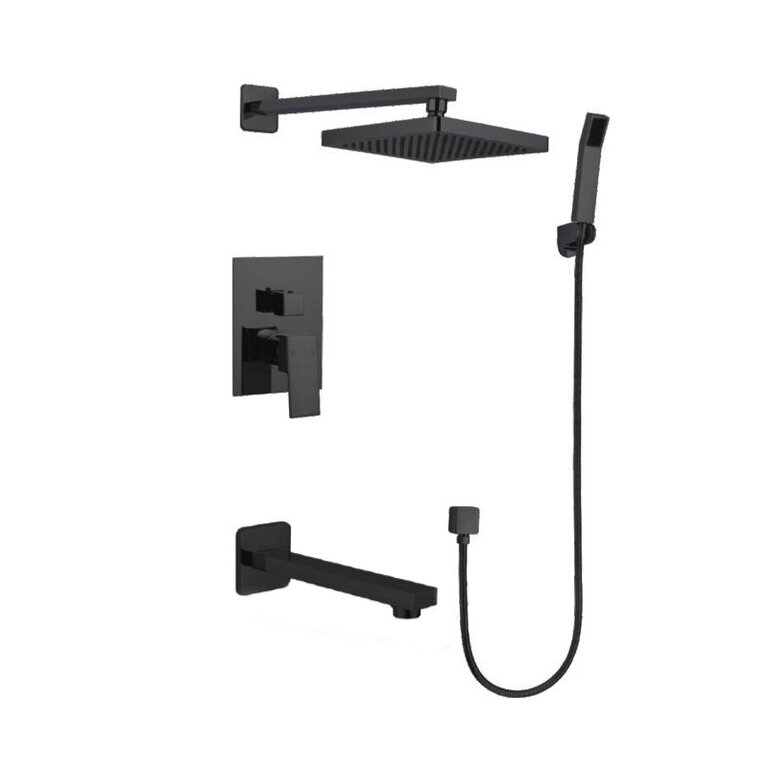
To easily compare styles, configurations and finishes, explore a specialized selection of shower kits. If you'd like to first browse all categories (and get inspired based on installation types), also check out the showers section.
Conclusion: Make the Right Choice from the Start
The right shower kit follows a simple logic: dimensions suited to the space, thermostatic or other valve based on your needs, shower water pressure compatible with the type of outlet, and then a durable, easy-to-maintain finish. By following these criteria, you'll end up with a shower that's comfortable, safe and beautiful for years to come.
Ready to take the next step? Browse the models now, compare configurations and find the system that fits your bathroom in our shower kit collection.