

Login
Log in if you have an account
Register
By creating an account with our store, you will be able to move through the checkout process faster, store multiple addresses, view and track your orders in your account, and more.
Create an accountMaterials: Quartz Countertop vs Poly Marble Countertop

Choosing between a quartz countertop and a poly marble countertop depends on your budget, daily use, and desired style. Quartz is known for its durability and more premium appearance. Poly marble offers a more affordable and easy-to-maintain solution. This comparison presents the advantages and limitations of each material to help you make an informed choice for your bathroom vanity.
Why Countertop Choice Matters
The countertop is one of the most heavily used elements in a bathroom. It must withstand humidity, splashes, and daily use. Its material also influences the room's overall appearance and the furniture's durability.
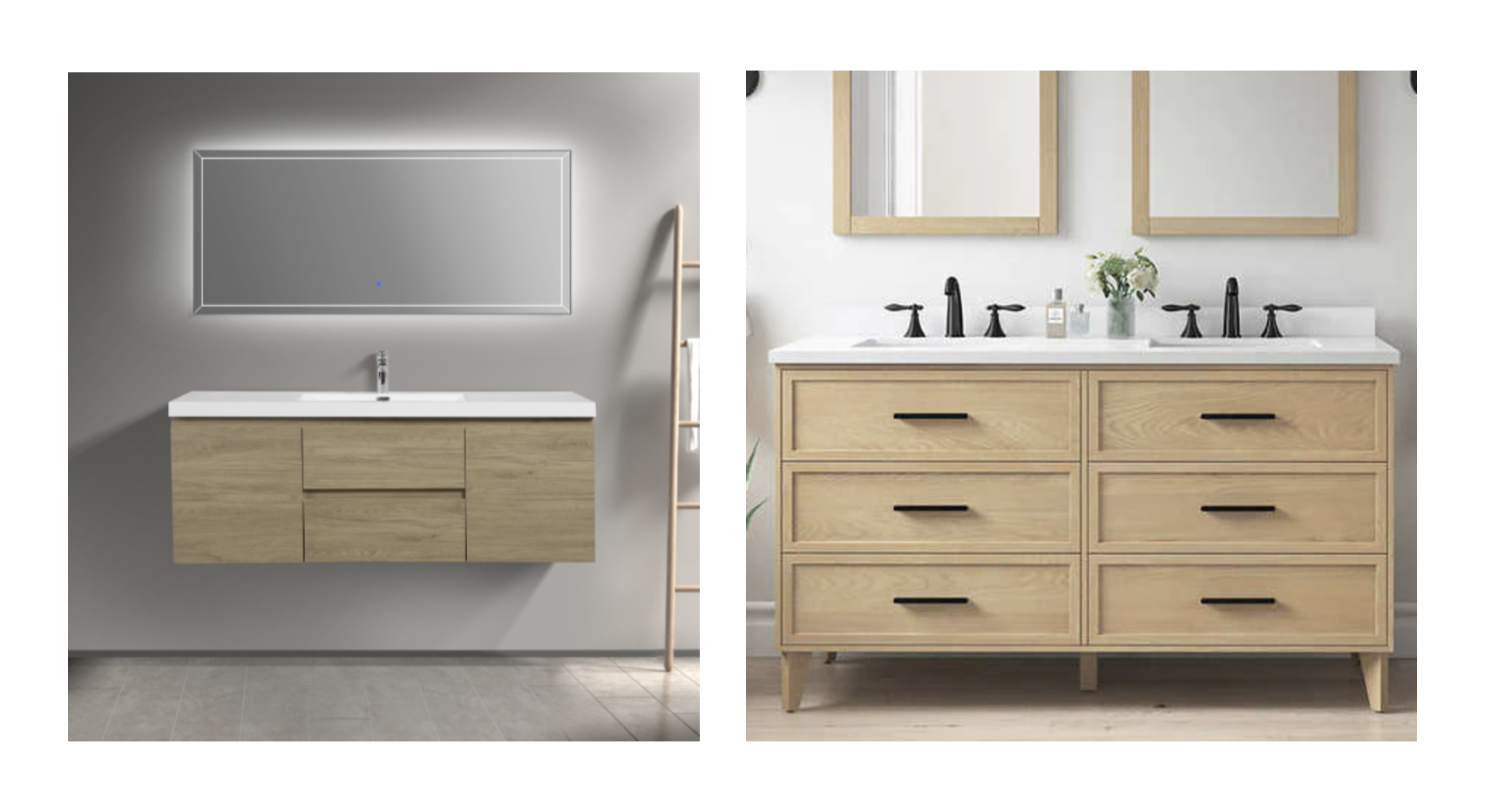
When choosing a bathroom vanity, the type of countertop plays a key role both aesthetically and practically. To better understand how this choice fits into the overall furniture piece, check out the buying guide for choosing a wall-mounted or freestanding vanity, which explains the differences based on space, style, and usage.
What is a Quartz Countertop

Quartz is a material composed of natural stone and resin. It's often used in primary bathrooms for its uniform appearance and high resistance.
Advantages
• Highly resistant to impacts and humidity
• Non-porous surface
• Simple daily maintenance
• Modern and polished appearance
• Wide range of colors
Limitations
• Higher cost
• Heavier material
• More demanding installation
Quartz countertops are often integrated into high-end bathroom furniture, where durability and finish are priorities.
What is a Poly Marble Countertop

Poly marble is a mixture of resin and marble powder. It's frequently used for ready-to-install vanities.
Advantages
• More affordable price
• Smooth surface, easy to clean
• Lighter weight than quartz
• Often integrated directly into the vanity
• Simpler installation
Limitations
• Less resistant to impacts
• Can scratch more easily
• More limited color choices
This material is often found on complete bathroom vanities, ideal for quick projects or secondary bathrooms.
Comparison Table: Quartz vs Poly Marble
|
Critère |
|
Comptoir en quartz |
|
Comptoir en polymarbre |
|---|---|---|---|---|
|
Resistance |
|
Very high |
|
Medium |
|
Moisture resistance |
|
Excellent |
|
Good |
|
Maintenance |
|
Easy |
|
Very easy |
|
Weigth |
|
Heavy |
|
Light |
|
Color choice |
|
Wide |
|
More limited |
|
Cost |
|
Higher |
|
More affordable |
|
Installation |
|
More technical |
|
Simpler |
|
Recommended use |
|
Primary bathroom |
|
Secondary bathroom |
How to Choose Based on Your Project
Choose Quartz
Quartz is suitable if the bathroom gets heavy use, if you're looking for a durable finish, and if the budget allows. It's often chosen for primary bathrooms.
Choose Poly Marble
Poly marble is appropriate if the budget is tighter or if the bathroom is used occasionally. It offers a simple and functional solution.
To complete the layout, choosing the sink or basin can also influence the bathroom's aesthetics and functionality.
Common Mistakes to Avoid
• Choosing based on price alone
• Neglecting the countertop's weight
• Forgetting about daily use
• Underestimating long-term maintenance
Final Summary
Quartz and poly marble are both materials well-suited for bathrooms. Quartz offers durability and a more premium finish. Poly marble remains an affordable and practical option. The best choice depends on your budget, intended use, and the type of vanity you're installing.