

Login
Log in if you have an account
Register
By creating an account with our store, you will be able to move through the checkout process faster, store multiple addresses, view and track your orders in your account, and more.
Create an accountMirror with Integrated Anti-Fog: How It Works and Why It's Practical Every Day
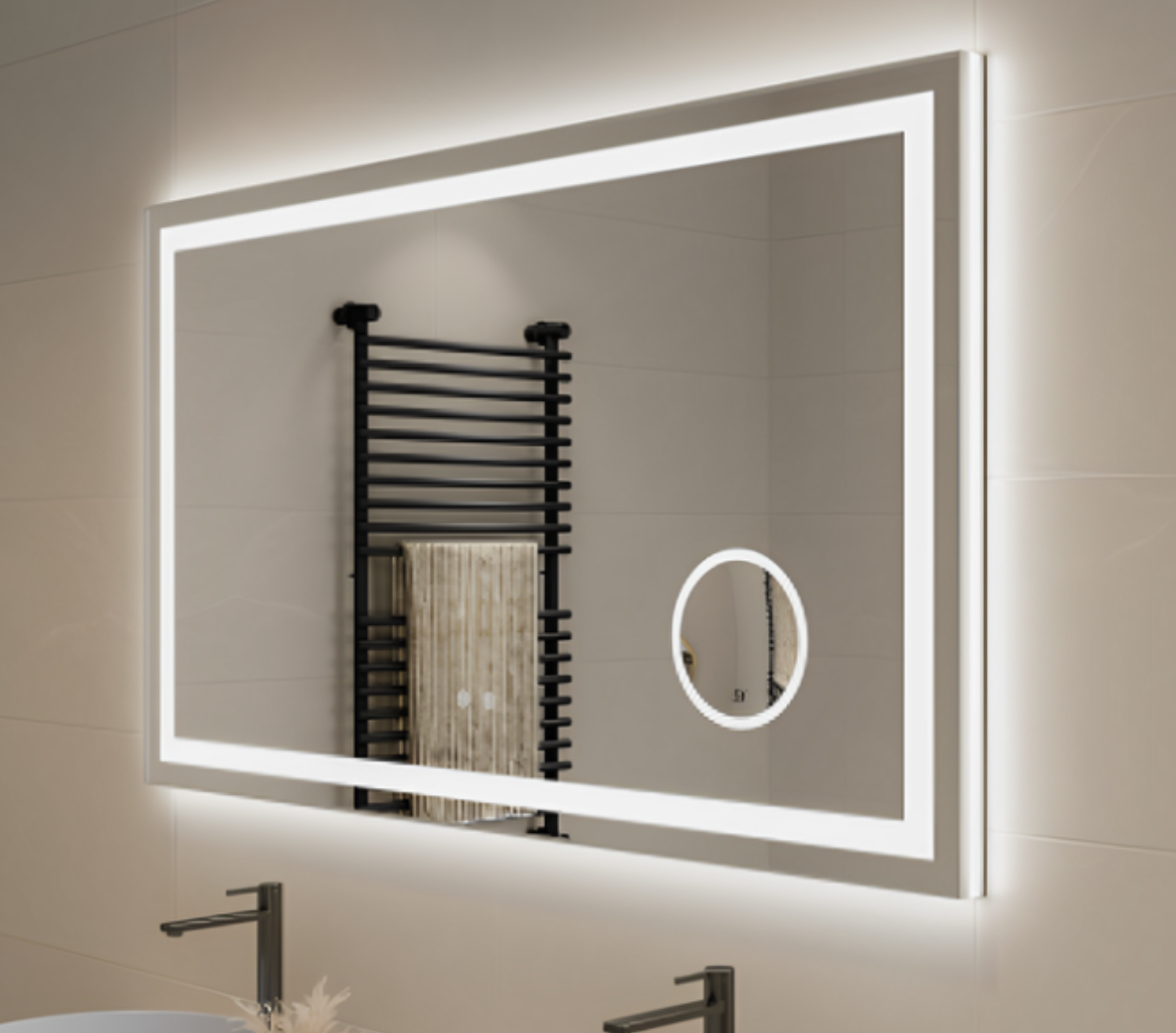
Who hasn't stood there, towel in hand, waiting for the fog to clear after a hot shower? In the bathroom, condensation on the mirror surface is a very common problem — especially in homes where ventilation isn't perfect, or when several people are getting ready one after another. The anti-fog mirror brings a simple solution: keeping a zone of the mirror clear, even when the air is heavy with moisture.
In this article, we explain how it works, what the system actually does (and doesn't do), and why it makes a real difference in daily life. The goal: to help you understand the technology so you can make a better choice — without unnecessary jargon.
Why a Mirror Fogs Up: The Short Answer
Fog appears when water vapor (warm, humid air) comes into contact with a cooler surface, like the mirror glass. This vapor condenses into microdroplets that scatter light — making the reflection blurry. The greater the temperature difference between the air and the mirror, the faster condensation forms.
The result: after a shower, even with a bathroom exhaust fan running, the mirror can remain unusable for several minutes. This is precisely what mirror defogging aims to prevent.

How Does a Mirror with Integrated Anti-Fog Work?
The majority of models use the principle of a heated bathroom mirror. Rather than "chasing away" moisture, they prevent condensation from forming by gently warming the mirror.
The core of the system: a heating film (or element) behind the mirror
In an anti-fog mirror, a heating element is fixed to the back — often a thin heating film, sometimes an integrated resistor depending on the design. When powered, it raises the temperature of the glass over a given area (often in the center, where you look at yourself). This warmth is enough to keep the surface above the dew point, which limits the formation of droplets.
A gentle, localized heat
One important point: the anti-fog system does not heat the bathroom. It warms the mirror moderately and, in many cases, only a portion of the surface. This is normal and even desirable — the goal is energy efficiency and comfort, not a "hidden radiator."
Controls: wall switch, touch sensor, or synchronized with the lighting
Depending on the model, the anti-fog feature can be activated:
- via a dedicated wall switch;
- via a button or touch sensor on the mirror;
- at the same time as the lighting, which is common on an LED anti-fog mirror.
Synchronization with the light is convenient, but not essential. Some people prefer to be able to activate the anti-fog only when needed.
How Long Before the Mirror Is Clear?
Mirror defogging is not instantaneous. Generally, it takes a few minutes for the heated zone to reach its operating temperature and keep the glass clear despite the steam. The delay depends on several factors:
- the initial temperature of the mirror (the colder it is, the longer it takes);
- the humidity level and temperature of the shower;
- the power of the heating element and the surface area heated;
- the ventilation of the room.
In practice, many people activate it before stepping into the shower or at the very start of their morning routine. This avoids any waiting afterward.
What the Anti-Fog Does… and What It Doesn't
What it does
- Significantly reduces fogging on the heated zone of the mirror.
- Improves daily comfort: makeup, shaving, hair styling, skincare.
- Eliminates "emergency" gestures (wiping with a towel, opening the door, blowing on the mirror).
What it doesn't do
- Does not replace ventilation: if humidity remains high, the room can still be damp — walls, ceiling, textiles included.
- Does not guarantee a 100% fog-free mirror everywhere: on some models, only one zone is heated; the rest may fog slightly.
- Does not fix installation problems: a poorly ventilated bathroom can still develop mold and odors, with or without an anti-fog mirror.
Why It's Practical Every Day
The value of an anti-fog mirror shows up in the small details of daily life — especially when the bathroom is shared.
1) Saving time in the morning
When you're moving through a shower, skincare, hair styling, and getting ready all in a row, waiting for fog to clear is wasted time. With a heated bathroom mirror, the usable zone stays legible, making your routine smoother.
2) Better comfort for shaving and precision grooming
Shaving, beard trimming, makeup, or putting in contact lenses all require a clear mirror. An anti-fog mirror system eliminates blurry reflections and reduces the need to lean in close to the glass or wipe it — which can leave smears.
3) Fewer marks and less on-the-spot cleaning
Wiping a foggy mirror with a towel often leaves lint, streaks, and sometimes micro-scratches over time if the fabric is abrasive. Mirror defogging reduces these repeated gestures and helps keep the surface cleaner day to day.
4) A particularly appreciated solution in small bathrooms
In a small room, steam concentrates quickly and the temperature difference with the mirror is often more pronounced. Anti-fog is therefore all the more relevant — even if the exhaust fan or ventilation is running.
When the Mirror Also Provides Lighting: The LED Anti-Fog Mirror
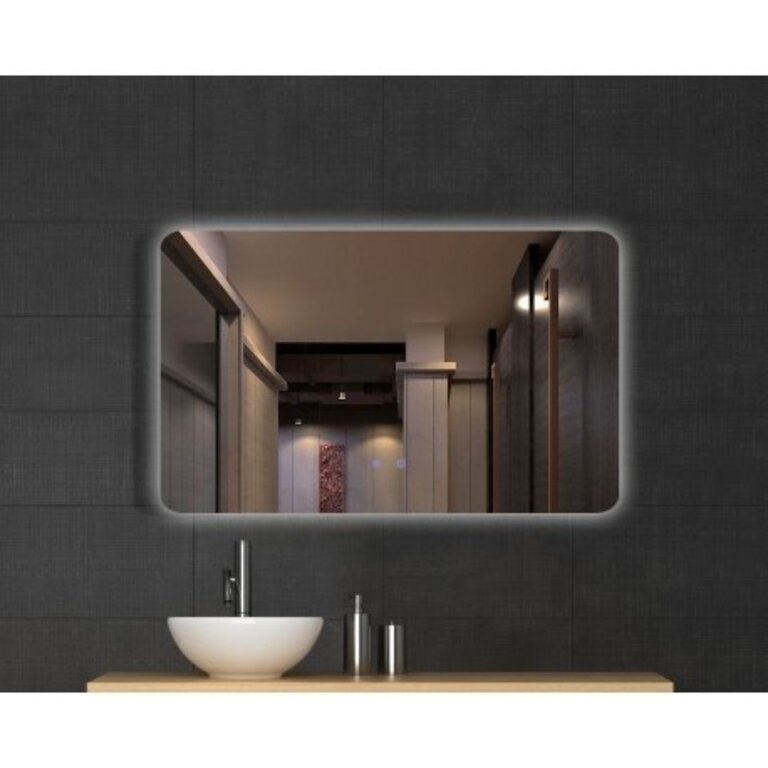
The LED anti-fog mirror combines two useful functions: integrated lighting and a mirror that stays clear. This is attractive for:
- obtaining more uniform light at face level;
- reducing shadow zones, especially if overhead lighting is weak;
- centralizing functions (mirror, light, anti-fog) in a single piece of equipment.
If you're exploring this type of product, you can browse the LED Mirrors collection or compare with other styles in Mirrors.
Points to Check Before Choosing an Anti-Fog Mirror
Two mirrors can both be labeled "anti-fog" without offering exactly the same experience. Here are simple criteria to examine.
Defogging surface area
Some systems heat a central zone; others cover a larger surface. If several people use the mirror or if you tend to move around in front of it, a larger heated zone may be more comfortable.
Type of control
Do you prefer a touch button, a separate control, or activation coupled with the lighting? The right choice depends on your routine (activating before the shower or only after).
Electrical installation and safety
A heated mirror requires a power supply that meets applicable standards and is suited to the bathroom zone. If hardwiring is required, it's wise to have the installation validated by a qualified professional — especially near water sources.
Room ventilation
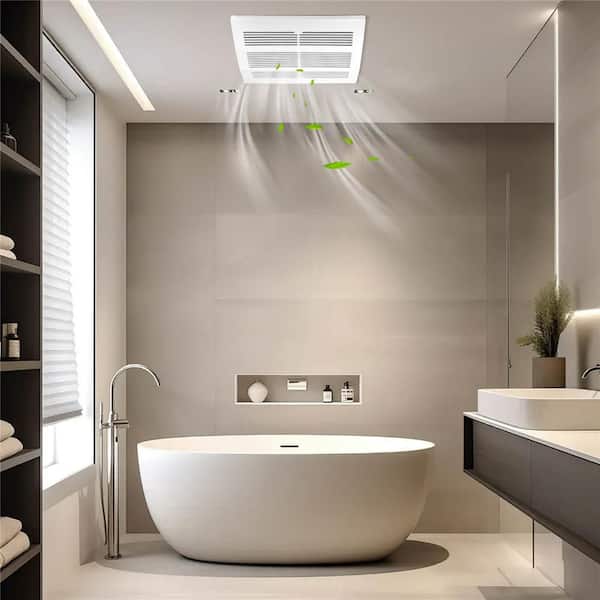
Even with the best anti-fog system, adequate ventilation remains essential. Anti-fog improves visual comfort, but overall humidity management depends mainly on the exhaust fan, airflow, and habits (shower duration, door open or closed, etc.).
Key Takeaways
The anti-fog mirror generally works through a heating film located behind the glass: it gently warms the mirror to prevent condensation from forming on its surface. This mirror defogging is particularly practical in daily routines — especially after a hot shower or in a shared bathroom. And if you opt for an LED anti-fog mirror, you also gain integrated lighting and a mirror that stays usable continuously, without waiting for the fog to clear.